
Choosing paint sheen for bright South Florida rooms
The same paint color can look quiet on one wall and shiny on another. We explain how daylight, wall texture and everyday cleaning should guide your finish choices before you approve the paint.
 PSR Home Remodeling · · 5 min read

Choose the sheen separately from the color
You can like a paint color and still dislike the finished wall. Color is only part of what you see. Sheen controls how much light the surface reflects, which changes how noticeable roller texture, patches and fingerprints become.
In a South Florida living room, sliding glass doors can send light across a long wall. That sideways light makes small surface differences stand out. A finish that looks restrained on a sample card may produce a broad reflection beside the glass.
We recommend choosing color and sheen as separate decisions. Start with what happens in the room: where people touch the walls, how you clean them and which surfaces catch direct or reflected daylight. Then compare actual samples rather than choosing a finish from its name alone.
Read the room in sideways daylight
Stand near your sliding doors and look along the wall, not just straight at it. Light traveling across the surface reveals raised repairs, uneven texture and old roller marks. Looking directly at the same wall from the doorway may hide those details.
Lower seasonal sunlight can reach farther into a room, so a wall that looks even under ceiling lights may look different in natural daylight. Pale tile floors can also bounce light upward. We consider those conditions before suggesting a finish for a broad living room wall.
Painted plaster or textured finishes over block walls do not reflect light like smooth drywall. Where an addition meets an older room, different wall textures may remain visible even when the paint color matches.
- Look at walls beside windows and sliding glass doors.
- Check repaired areas from an angle.
- Notice reflections from pale floors and nearby outdoor paving.
- Compare daylight with the lamps you normally use.
Tell us which viewing position bothers you. That gives us a specific surface to evaluate rather than a general request to make everything look smoother.
Match the finish to cleaning and contact
Flat and matte finishes generally reflect less light. That can make broad wall areas look calmer, but cleaning performance varies by paint formulation. Do not assume every low-sheen finish tolerates repeated wiping equally well.
Eggshell and satin introduce more reflection. They can suit walls that need regular cleaning, although the exact balance depends on the coating. Finish names are not consistent enough to choose solely by the label.
Semigloss creates a more obvious reflection and is often considered for trim and doors. It also draws attention to rough filler, brush marks and uneven joints. Choosing it for cleanability does not make those surface details disappear.
We separate surfaces by use rather than giving every room the same finish:
- Broad living room walls: compare lower-sheen options where glare matters.
- Hallways and dining areas: weigh cleaning needs against reflected light.
- Doors and trim: consider hand contact, wiping and the condition of the existing surface.
- Ceilings: evaluate glare separately from the walls below.
Ask what cleaning method the proposed coating allows. A finish that needs gentle wiping may not suit a wall you routinely scrub.
Do not use sheen to solve a moisture problem
A bathroom wall needs a finish suited to its conditions, but a shinier coating is not a substitute for ventilation or a dry surface. Humidity, condensation and water entering around an opening need attention before repainting.
We distinguish between a wall that gets occasional splashes and one that stays damp. Peeling beside a shower or beneath a window deserves investigation. Covering the area with a different sheen does not address the source.
The same applies near sliding doors exposed to wind-driven summer downpours. If paint is lifting near the frame, we look beyond the finish choice. The opening, surrounding surfaces and moisture conditions may need attention before painting proceeds.
If suspected mold needs testing or handling, that belongs with licensed specialists. Once the underlying condition has been addressed and the surface is ready, we can return to selecting the coating. For the broader preparation process, read Why prep is most of a paint job.
Approve samples on the surfaces that matter
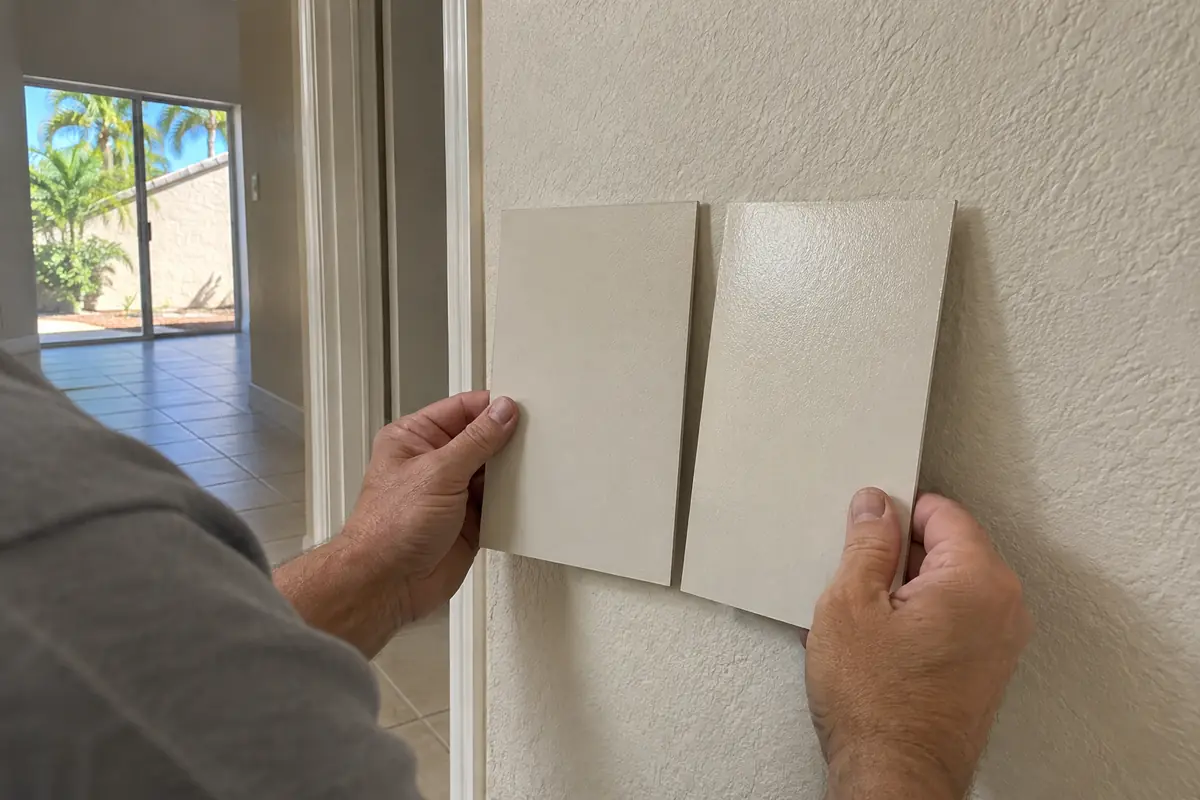
A small color chip cannot show how sheen behaves across a wall. Ask for samples of the proposed color in the finishes you are considering. Label them separately on your own notes so the comparison stays clear.
Movable sample boards help you compare locations, but they do not reproduce every wall texture. Where the existing texture is central to the decision, discuss a prepared sample area on the actual wall. The sample needs to represent the proposed finished coating, not a thin swipe over a different color.
Let samples dry as directed before judging them. Look from the sofa, the hallway and beside the glass doors. Compare them under ordinary lighting, with the room arranged as you use it.
Choose the sample you can live with in the least flattering light. If satin creates a reflection you dislike, say so before the room is painted. If a matte sample feels too delicate for a busy passage, discuss a different coating or finish there.
Put the finish decisions in the painting scope
Before work starts, the scope should identify the color and sheen for walls, ceilings, doors and trim. Include exceptions, such as a hallway finish that differs from the adjoining living room. You can review the work we offer on our interior paint page.
Discuss future touch-ups too. A spot repair can remain visible because its texture, application or sheen differs from the surrounding paint. Sometimes repainting a complete wall to a natural stopping point gives a more consistent appearance than repeatedly touching the same patch.
Keep a written record of the approved finish for each surface. When you need another repair, that record gives the next painting decision a useful starting point.
Ready to compare finishes in your own rooms? Request a free in-home estimate or call (866) 826-5523.
Written by PSR Home RemodelingLicensed and insured remodeling contractor serving Broward, Miami-Dade and Palm Beach counties. 804 NW 21st Terrace, Miami.


