
Can your gutters stay during roof replacement?
Your gutters may look fine from the yard but still complicate work at the roof edge. We explain how to decide what stays, what needs closer inspection and who handles removal or reattachment.
 PSR Home Remodeling · · 4 min read

Separate the gutter decision from the roof decision
A roof replacement does not automatically require new gutters. It also does not mean existing gutters can stay attached throughout the work. Keeping them and leaving them untouched are different decisions.
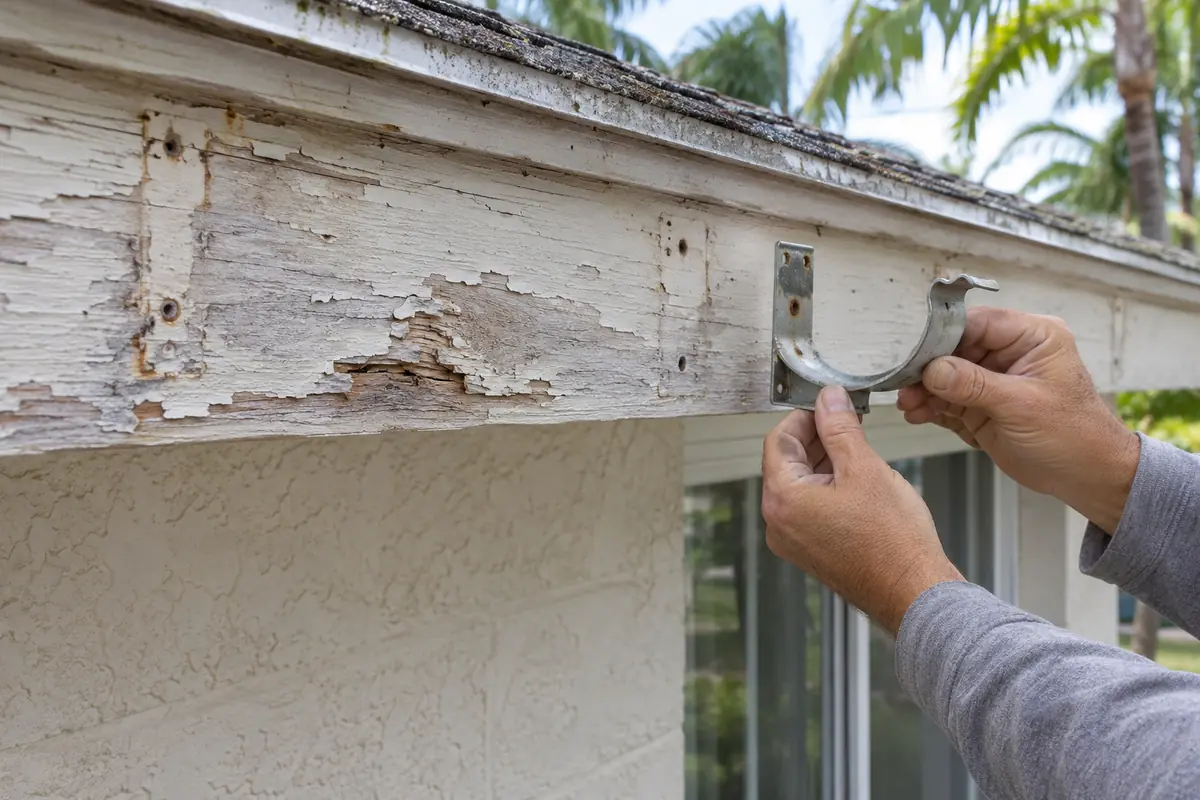
On South Florida homes, we often see gutters tucked close beneath a roof edge, with their attachments hidden from someone standing in the yard. Fresh paint on the fascia, the board behind the gutter, can make the assembly look sound without telling us how it is fastened or what is behind it.
Start by telling us whether you want to preserve the gutters. Then ask whether their position allows access to the roof edge and whether removal could damage them. That conversation belongs in the roof scope, not in a quick agreement after tear-off has started.
A break in afternoon rain is a useful opportunity to look over the exterior from the ground. Note stains, separated joints and places where water spills during rain. Do not climb onto the roof to investigate.
Look at the connection, not just the gutter finish
The important area is where the roof covering, edge metal, fascia and gutter meet. Edge metal helps direct water away from vulnerable roof edges. A gutter collects runoff, but it cannot substitute for a properly detailed roof edge.
An existing gutter may obstruct removal or replacement of edge materials. Its hangers may also share space with the work that needs attention. The answer depends on the existing assembly and the replacement roof details, not simply whether the gutter looks straight.
We look for visible clues that deserve closer inspection:
- Dark streaks or peeling paint behind the gutter rather than only beneath its outlet.
- Gaps between the gutter and fascia, or attachments that appear loose.
- Rust, corrosion or distorted metal around joints and fasteners.
- Patchwork sealant where roof-edge materials and gutters meet.
- Sagging sections or water remaining in parts of the gutter after rain.
Salt air makes corrosion worth checking closely near the coast. Painted stucco on block walls can also show runoff paths, although a stain alone does not identify the cause. We distinguish observations from findings that require the edge to be opened.
Ask this directly: Can the roof-edge work be completed properly with these gutters attached, or does the scope need removal and later reattachment?
Plan for what the gutter might be hiding
Removing a gutter can expose deteriorated fascia, damaged attachment points or old repairs. Those conditions are not always visible during an estimate. A clean exterior face is not proof that the material behind it is suitable for reattachment.
Your written scope should explain how concealed conditions are documented and how proposed additional work reaches you for approval. Ask for photographs and a plain-English explanation of what was uncovered, what needs attention and which part of the original plan changes.
Avoid agreeing in advance that the gutter must go back in exactly the same position regardless of what is found. Its final position needs to suit the completed roof edge and sound attachment material.
Also discuss the finish work. Replacing fascia can leave an unpainted surface. Removing brackets can expose old paint outlines or holes. Ask who handles those areas and whether painting is included or excluded. These are small details visually, but they should not be left without an assigned owner.
If an association controls exterior appearance, ask it about gutter profiles, colors and visible changes before making selections.
Assign removal, storage and reattachment in writing
Even when gutters appear reusable, taking them down can reveal brittle joints, distorted sections or attachments that cannot be reused. Preservation should be a goal subject to condition, not a promised outcome.
Before work starts, identify who is responsible for each part of the gutter work. Do not assume that a roof replacement estimate includes everything attached near the roof.
- Removal: State which sections need to come down and who handles them.
- Storage: Identify a protected location where long sections are not blocking doors or resting beneath demolition work.
- Condition review: Explain who decides whether removed sections remain suitable for reuse and how you approve replacements.
- Reattachment: Name the responsible party and explain how that work coordinates with the completed roof edge.
- Finishing: Assign fascia repairs, exposed holes, painting and cleanup.
Storage deserves particular attention on homes with narrow side yards, sliding glass doors and frequently used patios. Our article on planning home access during roof replacement covers the broader staging questions. Here, the specific decision is where reusable gutter sections can sit without interfering with the household or roof work.
Check where the water goes afterward
Keeping an existing gutter should not mean ignoring an existing discharge problem. Walk the downspout route from the roof edge to its outlet. Look for water marks on stucco, washed-out planting beds and runoff crossing a doorway or collecting beside a patio.
Summer downpours make those routes important even when you are planning the work during drier weather. Ask whether the existing outlets remain appropriate, and identify any drainage questions that need separate assessment. Moving a downspout without considering its destination can simply move the problem.
At the final walkthrough, ask to review the gutter sections affected by the work, their attachments and the roof-edge connection. Request photographs of details you cannot safely see from the ground. Ask how drainage is checked, and report any overflow or water appearing behind the gutter when rain returns.
For your estimate, bring any ground-level photos of overflow and tell us which gutters you hope to keep. We can include the roof-edge questions in the discussion of your roof replacement so the written scope separates included work, exclusions and decisions that depend on concealed conditions.
Request a free in-home estimate or call (866) 826-5523 to discuss your roof and existing gutters.
Written by PSR Home RemodelingLicensed and insured remodeling contractor serving Broward, Miami-Dade and Palm Beach counties. 804 NW 21st Terrace, Miami.


