
Fix the roof before you remodel inside
A ceiling stain deserves attention before new cabinets or flooring arrive. We check the roof and the spaces beneath it so you can decide what needs repair before interior work moves forward.
 PSR Home Remodeling · · 5 min read

Start above the finishes you want to replace
New drywall, cabinets and floors sit beneath whatever the roof lets through. If water is still entering, covering the ceiling or installing finishes leaves the source unresolved. When roof work and interior remodeling are both needed, we put the roof first.
In South Florida, a painted ceiling can hide evidence between summer downpours. Block walls and concrete slab floors do not make the finishes attached to them immune to water damage. Cabinet panels, trim and flooring materials still need suitable conditions before installation.
We start by asking what you have noticed: where the stain appeared, whether it changes after rain and whether anyone has already patched or painted the area. Photos from an earlier rain can help us understand the pattern. A ceiling that looks clean on estimate day does not tell the whole story.
The first decision is not the paint color or cabinet style. It is whether the roof needs attention before those materials go in. That question belongs in the initial scope, even when your main goal is a better kitchen or a new floor.
Trace the ceiling mark before blaming the roof
A brown ceiling ring is a clue, not a diagnosis. Water can travel along roof framing or other surfaces before reaching the drywall below. The visible mark may be away from the opening that admitted it. Painting the mark tells us nothing about whether that opening remains.
We compare the interior evidence with roof conditions and accessible spaces above the ceiling. Around the roof, that means looking at coverings, transitions, penetrations and flashing, the pieces that direct water away from joints. We also look for drainage concerns and visible deterioration around exposed metal, especially where salt air reaches the house.
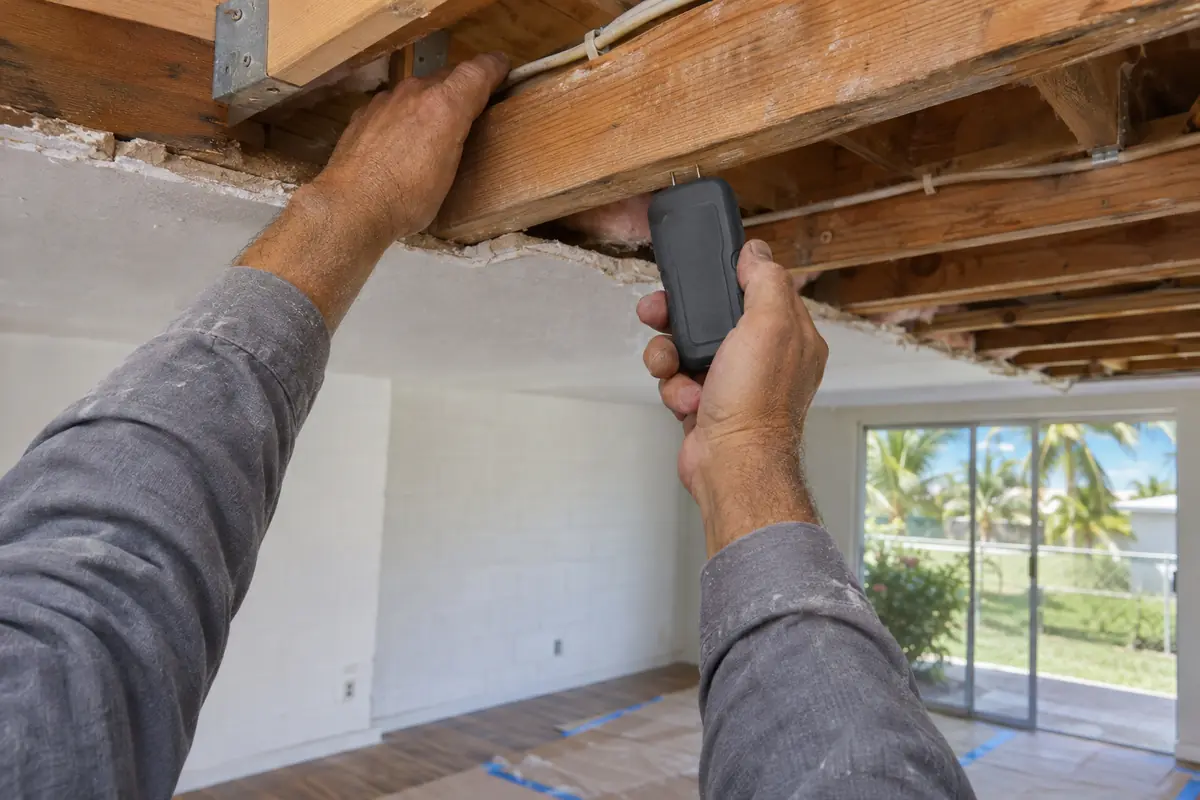
Inside, we look for staining, peeling paint, swollen trim, damaged drywall and moisture readings that need investigation. Accessible attic areas can add useful information, but insulation, tight clearances and finished ceilings may limit what we can see. We explain those limits rather than treating a visual check as a complete answer.
- Tell us whether marks change after rain or appear near air-conditioning equipment or plumbing.
- Point out earlier patches, even if the ceiling currently looks dry.
- Keep photos of stains before repainting or removing damaged material.
- Ask what evidence supports the proposed repair and what remains uncertain.
Plumbing and air-conditioning condensation can also leave ceiling marks. If the evidence points away from the roof, the right trade needs to investigate that source. In a condo, ask your association who handles the roof and any shared components before authorizing work.
Define the roof work before opening the interior
Once the source is understood, we separate the roof scope from the interior scope. A localized problem and a roof that needs replacement are different projects. An interior remodel alone is not a reason to replace a serviceable roof, but an unresolved roof problem is a reason to reconsider the order of work.
We explain which areas need attention, what access is required and how the roof work affects the rooms below. If replacement is needed, we plan it before installing ceilings, cabinets and floors that would complicate access or require protection from overhead work.
Permit requirements also belong in that plan. We pull the permits, answer the plan reviewer, meet every inspector and close the permit. Your building department determines the required review and inspections for the proposed scope. Our roofing page is a starting point for discussing the work your house needs.
If roof investigation reveals a structural change is needed, such as adding a beam, drawings signed and sealed by a Florida-licensed engineer or architect are needed before the building department issues a permit. That is a separate decision from replacing stained drywall. We identify it before treating the ceiling repair as a finishing task.
Check conditions below before closing them up
Completing the roof work does not automatically mean the interior is ready. Material below the roof may still be damp or damaged. We check the affected areas again and decide what can remain, what needs removal and what needs further investigation.
Moisture readings help guide that decision, but a reading is not a substitute for tracing the source. The material, location and surrounding conditions matter. A dry-looking surface can also conceal damage behind it. Where access is needed, a limited opening may tell us more than another coat of stain-blocking primer.
We avoid closing damp assemblies behind new drywall or cabinetry. Drying depends on the materials and conditions, including South Florida humidity. Flooring also has its own substrate requirements. A concrete slab beneath the affected room needs evaluation for the flooring being installed, even after the overhead problem has been addressed.
If mold, asbestos or lead is suspected, testing or handling belongs with licensed specialists. That work becomes part of the project sequence before ordinary finishing proceeds.
Ask us to make the handoff clear: what was repaired above, what was found below and what conditions need to be met before installation. Temporary protection is not the same as a completed roof repair, and a freshly painted ceiling is not evidence that the source was corrected.
Release the interior work in a clear order
Once the roof scope is complete and the affected interior materials are ready, the remodel can move into its finishing sequence. Any remaining rough work and required inspections come before closing walls or ceilings. Then repairs and finishes proceed according to the room and materials involved.
For a kitchen, our article on the order a kitchen remodel actually happens in explains the room-level sequence. The roof check comes ahead of that sequence when there is evidence of water entering from above.
Before approving the combined scope, decide who is responsible for each handoff, including association-managed roof work in a condo. Keep roof repairs, interior removal, drying checks and finish installation visible in the plan. You should be able to understand what must happen before the next trade starts.
Schedule a free in-home estimate or call (866) 826-5523 to discuss the roof and your interior remodeling plans together.
Written by PSR Home RemodelingLicensed and insured remodeling contractor serving Broward, Miami-Dade and Palm Beach counties. 804 NW 21st Terrace, Miami.


